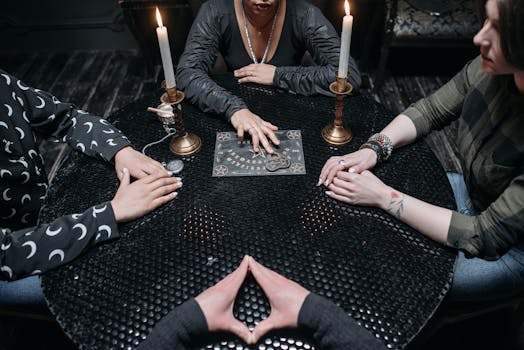
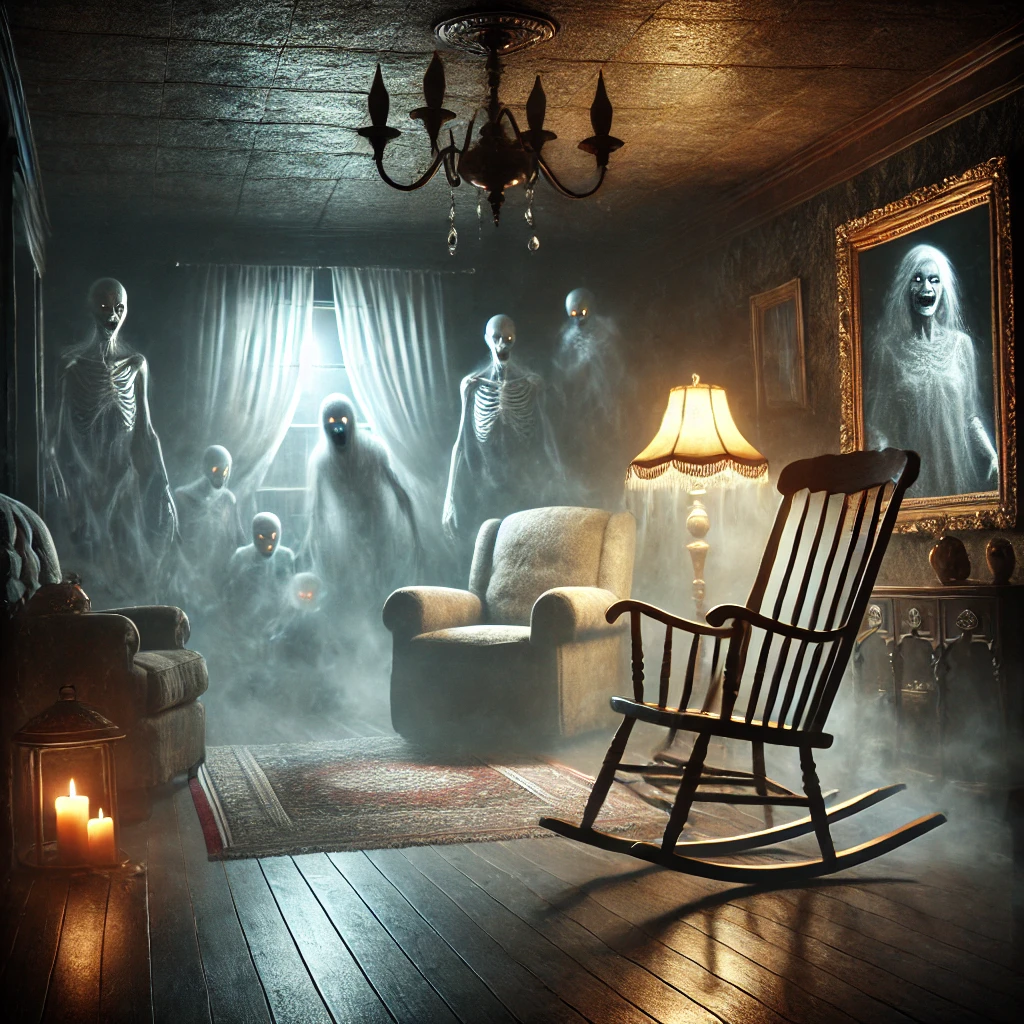
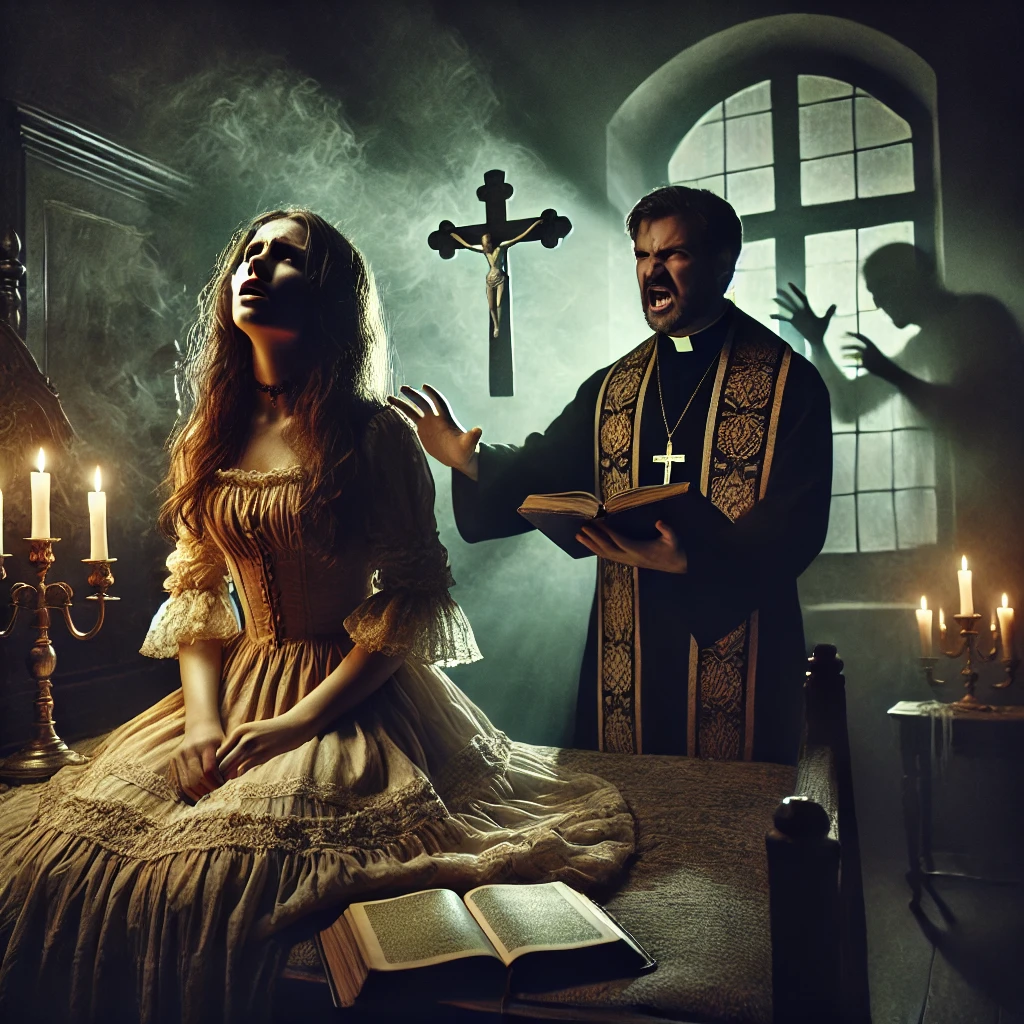
Why Dark Figures Appear During Sleep Paralysis and What They May Mean for Your Mind, Body, and Paranormal Experiences
By Kevin Mack, Paranormal Research Writer and Founder of Paraghosts
Updated: May 22, 2026
I write about ghosts, hauntings, shadow figures, sleep paralysis experiences, and the strange overlap between paranormal reports and sleep-related phenomena. This article is educational and non-medical.
Contents
- Key Takeaways
- Introduction
- What Is Sleep Paralysis and Why Do People See Shadow People?
- Why Does the Connection Between Sleep Paralysis and Shadow People Matter?
- What Are Shadow People During Sleep Paralysis?
- What Causes Sleep Paralysis and Shadow People Experiences?
- Main Signs of Sleep Paralysis Shadow People Experiences
- Sleep Paralysis vs Paranormal Shadow Person Encounter
- How to Understand Sleep Paralysis and Shadow People in Real Life
- Common Myths and Misconceptions About Sleep Paralysis and Shadow People
- Expert Insights About Sleep Paralysis and Shadow People
- Best Practices and Practical Tips
- People Also Ask:
- Conclusion
- About the Author
- Medical Disclaimer
- Related Articles From Paraghosts.com
- Sources and References
Key Takeaways
- Sleep paralysis and shadow people are often connected because the brain may wake up before the body fully exits REM sleep.
- Many people report seeing a dark figure, shadow person, “Hat Man,” or bedroom presence during sleep paralysis.
- Scientific explanations often point to REM sleep, hypnagogic or hypnopompic hallucinations, fear response, stress, lack of sleep, and disrupted sleep patterns.
- Paranormal interpretations view shadow people as possible spirits, entities, watchers, or attachments, but these claims are difficult to prove.
- The experience can feel completely real because the person is awake enough to see the room but still trapped in a dream-like state.
- Understanding the difference between sleep paralysis, nightmares, ghost sightings, and repeated paranormal activity can help you respond calmly and safely.
Introduction
Sleep paralysis and shadow people are often connected because the brain can create vivid fear-based hallucinations while the body remains temporarily frozen. Learn why people see dark figures in their room during sleep paralysis, what may trigger it, and when to seek help.
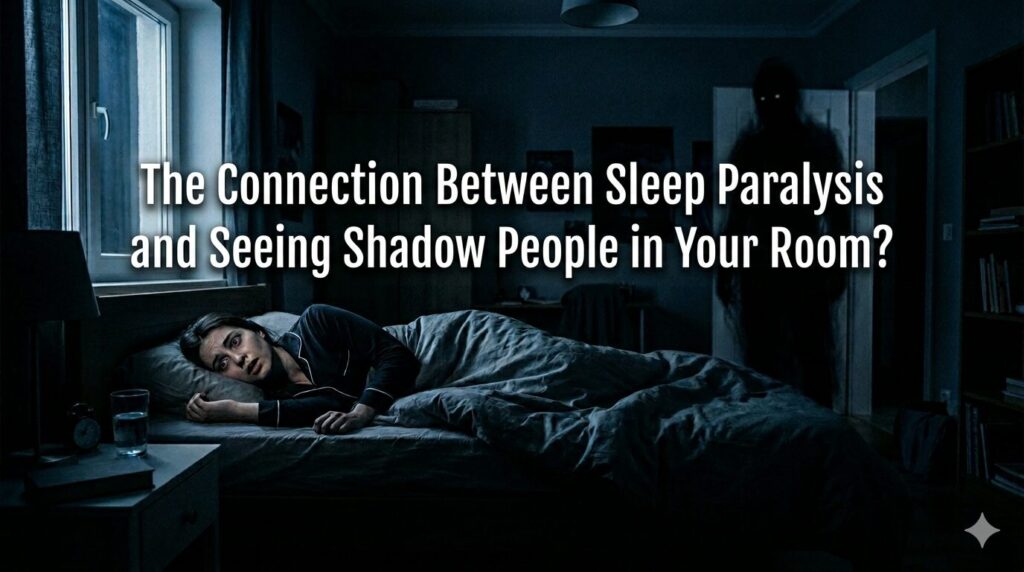
Seeing a shadowy figure standing in your room while you cannot move is one of the most terrifying experiences a person can have.
The connection between sleep paralysis and shadow people matters because many people wake up frozen, feel a dark presence nearby, and wonder if they saw a ghost, demon, spirit, or something created by the mind.
The experience feels real because your eyes may be open. Your room looks familiar. You may hear breathing, whispers, footsteps, buzzing, or a low pressure in the air.
Some people feel like something is watching them from the corner. Others see a tall black figure near the bed, in the doorway, or at the foot of the mattress.
From a sleep science view, these experiences are often connected to REM sleep, temporary muscle paralysis, and vivid hallucinations that occur while falling asleep or waking up.
From a paranormal view, people often describe these same figures as shadow entities, spirit visitors, or dark presences. The truth is that both sides deserve careful discussion.
Sleep paralysis and shadow people are connected because the brain can remain partly in REM sleep while the person becomes aware of the room. During this state, vivid hallucinations, fear, and body paralysis may create the experience of seeing a dark figure, shadow person, or presence nearby.
What Is Sleep Paralysis and Why Do People See Shadow People?
Sleep paralysis is a temporary state where a person is conscious but unable to move or speak while falling asleep or waking up.
During this episode, some people also see, hear, or feel things that are not physically present.
These experiences can include shadow figures, dark shapes, a sensed presence, pressure on the chest, whispering, footsteps, buzzing sounds, or the feeling that someone is in the room.
The connection between sleep paralysis and shadow people usually comes from a strange overlap between wakefulness and dreaming.
During REM sleep, the body naturally limits muscle movement so people do not physically act out dreams.
When part of the mind wakes up before that temporary paralysis has ended, a person may feel trapped inside their body.
That alone is frightening. But the fear becomes stronger when dream imagery seems to blend with the real room.
This is why many people say things like:
- “I was awake, but I could not move.”
- “I saw a black figure beside my bed.”
- “I felt someone standing over me.”
- “There was a dark shape in the doorway.”
- “It felt evil, but I could not scream.”
- “I knew my room was real, but something was there.”
As someone who writes about paranormal encounters, I have noticed that sleep paralysis reports often sound very similar to shadow person sightings.
The bedroom setting, the frozen body, the feeling of being watched, and the dark human-like figure are repeated across many stories.
That pattern does not automatically prove the experience is only sleep-related, but it does show why sleep paralysis should always be considered before labeling the event paranormal.
For a simple medical explanation of sleep paralysis, MedlinePlus describes it as a condition where a person cannot move or speak while falling asleep or waking up, even though they are aware of what is happening
Why Does the Connection Between Sleep Paralysis and Shadow People Matter?
The connection matters because people often leave the experience afraid, confused, and sometimes convinced that something supernatural entered their room. When you do not understand what happened, it is easy to spiral into fear.
That fear can affect sleep. A person may avoid sleeping alone. They may keep lights on.
They may become hyper-aware of every shadow in the bedroom. Some people even start searching for demons, hauntings, portals, curses, or spirit attachments before considering the sleep-related explanation.
Understanding sleep paralysis helps for three reasons.
First, it gives the experience a possible explanation. You are not “wild” for seeing something. Sleep paralysis hallucinations can feel vivid and real. The fear response can make the shadow figure feel threatening.
Second, it helps separate one-time sleep events from possible recurring paranormal activity. If the shadow figure only appears when you wake frozen and unable to speak, sleep paralysis is a strong possibility.
If the activity happens while fully awake, in different rooms, with multiple witnesses, objects moving, repeated voices, or documented environmental changes, then the situation may need a different kind of investigation.
Third, it helps reduce panic. Once someone knows what sleep paralysis is, the next episode may still feel scary, but it may not feel as mysterious.
What Are Shadow People During Sleep Paralysis?
Shadow people during sleep paralysis are usually described as dark, human-like figures seen during a frozen waking state.
They may appear as a tall black figure, a faceless person, a hooded shape, a child-sized shadow, a dark mist, or a figure wearing a hat.
People often describe several common types of these entities.
The Dark Figure at the Foot of the Bed
This is one of the most common reports. The person wakes up unable to move and sees a dark shape near the foot of the bed. It may stand still, lean forward, or seem to stare.
This type of figure is often linked to a strong “presence hallucination,” where the brain creates the feeling that someone is nearby.
The Shadow in the Doorway
Some people report seeing a tall black figure standing in the bedroom doorway. The doorway matters because it is a natural place where the mind expects a person to appear. In low light, the brain may turn shapes, clothing, furniture, or visual noise into a human outline.
The Hat Man Figure
The “Hat Man” is a specific shadow figure often described as tall, dark, and wearing a wide-brimmed hat. Some people connect the Hat Man to paranormal encounters, while many sleep experts and writers discuss it as a common sleep paralysis or nightmare-like figure shaped by culture, fear, and expectation.
The Chest Pressure Presence
Some sleep paralysis episodes involve the feeling of something sitting on the chest. Historically, different cultures described this as a night hag, demon, incubus, ghost, or spiritual attacker. Today, many sleep sources explain it as part of the body’s sleep state, breathing awareness, and fear response during temporary paralysis.
What Causes Sleep Paralysis and Shadow People Experiences?
Sleep paralysis does not always have one clear cause. Cleveland Clinic notes that the exact cause is unknown, but episodes may be associated with narcolepsy, lack of sleep, stress, disrupted sleep schedules, and other sleep-related factors.
Here are the most common explanations.
REM Sleep Overlap
REM sleep is the stage where vivid dreaming often happens. During REM, the body naturally becomes temporarily still. This is called atonia. Sleep paralysis may happen when awareness returns before the body fully exits that state.
That means the person may be awake enough to see the room but still affected by dream imagery.
Hypnagogic and Hypnopompic Hallucinations
Hypnagogic hallucinations happen while falling asleep. Hypnopompic hallucinations happen while waking up. These can involve sights, sounds, sensations, or a felt presence. Sleep Foundation explains that hallucinations can occur with sleep paralysis, and hypnopompic hallucinations are often not considered a sign of a serious underlying condition by themselves.
Fear and Threat Detection
When you wake up and cannot move, the brain may interpret the situation as danger. The body may respond with panic, rapid heartbeat, and a sense of threat. In that state, the mind may scan the room for an explanation.
A coat on a chair becomes a person. A dark corner becomes a figure. A normal shadow becomes a watcher.
This does not mean the person is making it up. It means the brain is trying to explain fear while stuck between sleep and wakefulness.
Stress, Poor Sleep, and Irregular Sleep Patterns
Many people notice sleep paralysis more often during stressful periods. It may also happen when sleep is broken, irregular, or too short. MedlinePlus describes sleep paralysis as occurring while falling asleep or waking up, and other sleep organizations also connect episodes with disrupted sleep and sleep-related conditions.
Sleeping on Your Back
Many people report sleep paralysis more often while sleeping on their back. This does not happen to everyone, but it is a common pattern in personal accounts and sleep paralysis discussions.
Paranormal Interpretation
Some people believe shadow people are not hallucinations. They may view them as spirits, interdimensional beings, negative entities, watchers, or ghosts. Paranormal researchers often take these reports seriously because many witnesses describe similar figures.
However, a balanced approach matters. A shadow figure seen only during body paralysis is not strong paranormal evidence by itself. It is an experience worth documenting, but sleep paralysis remains a strong possible explanation.
The Sleep Foundation explains that sleep paralysis can involve temporary inability to move or speak, along with hallucinations or a sensation of suffocation during sleep-wake transitions.
Helpful Video: Sleep Paralysis Explained Below.
For a simple visual explanation of what happens during sleep paralysis, watch this TED-Ed video. It helps explain why a person may wake up unable to move and feel like something frightening is in the room.
Main Signs of Sleep Paralysis Shadow People Experiences
Sleep paralysis with shadow people has several common signs. These signs do not prove the event is only sleep-related, but they can help you understand what may be happening.
- You wake up and cannot move.
This is the central sign. You may feel mentally awake but physically frozen. You may not be able to speak, sit up, or turn your head. - You see a dark figure in the room.
The figure may appear near the bed, in a corner, beside the door, or above you. It may look faceless, black, smoky, tall, or human-shaped. - You feel a presence before you see anything.
Many people report sensing someone in the room first. The visual shadow may appear after the fear starts. - You hear sounds that match the fear.
Some people hear whispers, buzzing, footsteps, breathing, knocking, or low voices. These can happen during sleep-related hallucinations. - You feel pressure on your chest.
This can make the experience feel like an attack. It may also increase panic because breathing feels strange while the body is still half-asleep. - The episode ends quickly.
Sleep paralysis usually lasts a short time, although it can feel much longer. When movement returns, the shadow figure often disappears. - The event happens near sleep or waking.
If the experience happens only as you are falling asleep or waking up, that points strongly toward sleep paralysis.
Sleep Paralysis vs Paranormal Shadow Person Encounter
| Feature | Sleep Paralysis Shadow Figure | Possible Paranormal Shadow Person Report |
|---|---|---|
| Body movement | You cannot move or speak | You are usually fully awake and mobile |
| Timing | Falling asleep or waking up | Can happen at any time |
| Location | Often bedroom or bed area | May happen in multiple rooms or locations |
| Witnesses | Usually one person | Sometimes multiple witnesses |
| Duration | Often brief | May repeat over time |
| Physical evidence | Usually none | Sometimes includes claims of sounds, movement, photos, or shared sightings |
| Common explanation | REM overlap and hallucination | Unexplained, spiritual, environmental, or paranormal theory |
This table does not dismiss paranormal experiences. It simply helps you avoid jumping to one conclusion too quickly.
How to Understand Sleep Paralysis and Shadow People in Real Life
Step 1: Stay Calm and Label the Experience
If you wake up frozen and see a shadow figure, remind yourself: “This may be sleep paralysis.” That simple label can reduce fear. The figure may still feel real, but your panic may decrease when your mind has a framework.
Try to focus on small movements. Wiggle a toe. Move a finger. Control your breathing. Many people find that tiny movement helps the body fully wake up.
Step 2: Write Down What Happened
After the episode ends, document the details.
Write down:
- Time of night
- Sleep position
- Stress level
- What you saw
- What you heard
- How long it seemed to last
- Whether you could move
- Whether anything happened after you got up
This helps you spot patterns. If every event happens during sleep transitions, sleep paralysis becomes more likely.
Step 3: Improve Your Sleep Routine
A better sleep routine may reduce episodes for some people. Try going to bed and waking up at consistent times. Avoid staying up too late for several nights in a row. Limit heavy screen use before bed. Create a calmer sleep environment.
This is not a guaranteed cure, but better sleep habits can help many sleep-related problems.
Step 4: Look for Red Flags
Consider talking to a qualified healthcare professional if episodes are frequent, intense, connected to extreme daytime sleepiness, or causing serious fear.
This is especially important if you also experience sudden muscle weakness, falling asleep unexpectedly, or other unusual sleep symptoms. Narcolepsy and other sleep disorders can involve sleep paralysis, so repeated symptoms deserve proper evaluation.
Step 5: Investigate Carefully if You Suspect Paranormal Activity
If you believe the experience may be paranormal, investigate calmly. Do not start with fear. Start with documentation.
Track the dates. Note whether other people experience anything. Check for natural causes like car headlights, hallway shadows, pets, pipes, sleep deprivation, carbon monoxide concerns, or outside noises. If you still notice activity while fully awake, with witnesses or repeat patterns, then you can treat it as a separate paranormal case.
Common Myths and Misconceptions About Sleep Paralysis and Shadow People
Myth 1: Seeing Shadow People Means You Are Mentally Ill
This is not true. Sleep paralysis hallucinations can happen to otherwise healthy people. A single episode does not mean someone is mentally ill. Sleep Foundation and other medical sources describe hallucinations as a known part of sleep paralysis for some people.
Myth 2: Every Shadow Figure Is a Demon
Some people interpret shadow figures spiritually, but it is not wise to assume every sleep paralysis figure is demonic. Fear can make the figure feel evil. The inability to move can make the experience feel like an attack. But strong fear does not prove a supernatural cause.
Myth 3: Sleep Paralysis Is Dangerous by Itself
Sleep paralysis is frightening, but many sources describe it as temporary. It usually passes. The bigger issue is fear, sleep disruption, and whether episodes are frequent or linked to another sleep disorder.
Myth 4: If Your Eyes Are Open, It Cannot Be a Hallucination
This is one of the biggest misunderstandings. During sleep paralysis, the room can look real because you may be partly awake. Hallucinated images can blend with the real environment.
Myth 5: Science Explains Everything About Shadow People
Science explains many sleep paralysis cases well, but it does not automatically explain every shadow person story ever reported. A careful investigator should separate sleep paralysis reports from fully awake sightings, group sightings, environmental events, and long-term haunting claims.
Expert Insights About Sleep Paralysis and Shadow People
The most important insight is that sleep paralysis sits in the middle of two worlds: the biological and the mysterious.
From the biological side, the experience makes sense. The body is frozen from REM sleep. The mind is afraid. The room is dark. Dream imagery may still be active. The brain searches for a threat and creates a figure.
From the paranormal side, the experience feels meaningful because people across cultures report similar presences.
Historical descriptions of night hags, demons, bedroom spirits, and shadow people show that humans have long connected these episodes to supernatural beings.
Wikipedia’s overview notes that sleep paralysis has been interpreted through cultural and spiritual lenses for centuries, including demons, ghosts, alien visitation, and shadow people.
My practical view is this: treat sleep paralysis as the first explanation, not the only possible explanation. That keeps you grounded without dismissing the witness.
A serious paranormal researcher should ask:
- Was the person unable to move?
- Did it happen while falling asleep or waking up?
- Did the figure vanish when movement returned?
- Were there other witnesses?
- Did activity happen outside sleep?
- Is there any environmental explanation?
- Is fear shaping the interpretation?
This approach protects the truth of the experience without rushing into unsupported claims.
Best Practices and Practical Tips
- Keep a regular sleep schedule.
Irregular sleep can make sleep problems worse. A consistent schedule may reduce the chances of sleep paralysis for some people. - Avoid feeding the fear before bed.
Watching scary videos, reading demon stories, or searching shadow people forums late at night may prime the mind for fear. - Sleep in a comfortable position.
If episodes happen mostly on your back, try side sleeping. - Use grounding after an episode.
Turn on a soft light. Sit up. Touch something solid. Tell yourself the episode has ended. - Document instead of panic.
A written log gives you clarity. Fear gives you confusion. - Do not shame yourself.
Many people experience sleep paralysis. Seeing a shadow figure during it can feel terrifying, but you are not alone. - Get help if it affects your life.
If fear of sleep is becoming serious, or episodes happen often, speak with a qualified professional.
People Also Ask:
Is seeing shadow people during sleep paralysis common?
Seeing a shadow person during sleep paralysis is a commonly reported experience. Many people describe a dark figure, sensed presence, or human-shaped shadow in the room while they cannot move. Sleep science often explains this as a hallucination connected to REM sleep and waking awareness. Paranormal writers may interpret it differently, but the sleep paralysis pattern is important.
Why do shadow people appear in the bedroom?
Shadow people often appear in bedroom reports because sleep paralysis usually happens while falling asleep or waking up. The person is already in bed, the room is dim, and the brain may still be partly dreaming. Fear can cause the mind to interpret normal shadows, corners, and shapes as a figure standing nearby.
Is the Hat Man connected to sleep paralysis?
The Hat Man is often connected to sleep paralysis because many reports involve waking up frozen and seeing a tall shadow figure wearing a hat. Some people believe the Hat Man is paranormal. Others view it as a recurring sleep paralysis hallucination shaped by fear, culture, and repeated stories online.
Can sleep paralysis feel like a ghost is in the room?
Yes. Sleep paralysis can feel like a ghost, spirit, demon, or unknown presence is in the room. The experience may include visual figures, sounds, pressure, and intense fear. Because the person is partly awake, the room may look real, which makes the experience feel more convincing.
Does sleep paralysis mean my house is haunted?
Sleep paralysis alone does not prove your house is haunted. If the experience only happens when you are waking up or falling asleep and you cannot move, sleep paralysis is a strong explanation. If strange activity happens while fully awake, with multiple witnesses or repeat physical events, you may need to look at other explanations too.
What should I do when I see a shadow figure during sleep paralysis?
Try to stay calm and remind yourself that the episode may pass quickly. Focus on slow breathing and small movements like wiggling a toe or finger. Afterward, write down what happened. If episodes happen often or cause major distress, consider speaking with a qualified healthcare professional.
Are shadow people real or hallucinations?
Some shadow people reports may be sleep-related hallucinations, especially when they happen during sleep paralysis. Other reports happen while people are fully awake, which makes them harder to explain. The best approach is to document the details, compare patterns, and avoid jumping to either a medical or paranormal conclusion too quickly.
Can stress cause sleep paralysis and shadow figures?
Stress may contribute to sleep disruption, and sleep disruption is often connected with sleep paralysis. When the body is tired and the mind is anxious, the chances of frightening sleep experiences may increase. Stress does not prove the figure is imaginary, but it can help explain why episodes happen more often during difficult periods.
Conclusion
The connection between sleep paralysis and seeing shadow people in your room is powerful because the experience feels both physical and supernatural.
You may be awake enough to see your bedroom, but still trapped in a REM-related state where the body cannot move and the mind may create vivid fear-based images.
The most balanced answer is this: many shadow people sightings during sleep paralysis can be explained by sleep science, especially REM overlap, hallucinations, fear, and disrupted sleep.
At the same time, people who report these experiences should not be mocked or dismissed. The fear is real. The memory is real. The question is what caused it.
If it happens to you, document it, stay calm, improve your sleep habits, and look for patterns.
If episodes become frequent or distressing, seek professional guidance.
And if you investigate the paranormal side, do it carefully, calmly, and with respect for both evidence and uncertainty and you just might find your answer.
About the Author
Kevin Mack is the founder and paranormal research writer behind Paraghosts.com, a blog focused on ghosts, hauntings, shadow people, paranormal experiences, and supernatural folklore.
He writes from a mix of personal interest, research, and real-world paranormal storytelling, with a focus on helping readers understand strange experiences in a balanced, easy-to-read way.
Kevin’s writing often explores the line between natural explanations and unexplained encounters. His work covers topics such as sleep paralysis, shadow figures, ghost sightings, haunted locations, spirit activity, paranormal investigation, and the deeper questions people ask after experiencing something they cannot easily explain.
Through Paraghosts, Kevin’s goal is to give readers clear, honest, and helpful paranormal content that respects both personal experiences and reasonable explanations.
His articles are written for people who want to learn more about the unknown without fear-based exaggeration, fake certainty, or unsupported claims.
Medical Disclaimer
This article is for educational and informational purposes only. It is not medical advice, mental health advice, diagnosis, or treatment.
Sleep paralysis, vivid dreams, nighttime fear, and seeing shadow-like figures during sleep transitions can feel very real and frightening, but only a qualified healthcare professional can evaluate your personal symptoms.
Contact a Doctor or medical professional if the signs are becoming to bothersome for you.
If you ever feel like you may harm yourself or someone else, seek emergency help right away by calling your local emergency number or going to the nearest emergency room or by calling 911.
Related Articles From Paraghosts.com
1. Truth About Shadow People: Paranormal Phenomenon Explained
This article goes deeper into shadow people, dark figures, and the different theories behind these strange encounters. It also discusses how sleep paralysis, hallucinations, stress, and fear may contribute to shadow figure sightings.
2. What Are Shadow Figures? Understanding the Paranormal Phenomenon
This article fits naturally with the sleep paralysis topic because it explains what shadow figures are, why people report seeing them, and how paranormal investigators often interpret these dark humanoid shapes.
3. Shadow Figures Caught on Camera That Science Cannot Explain
This is a follow-up article for readers who want to explore reported shadow figure sightings beyond sleep paralysis. It connects well with the article’s balanced discussion of natural explanations, fear, lighting, and unexplained paranormal claims.
Sources and References
- MedlinePlus Medical Encyclopedia: Sleep Paralysis
A trusted government-backed health resource that explains sleep paralysis as a temporary condition where a person cannot move or speak while falling asleep or waking up. It supports the article’s basic definition and non-medical explanation of the experience. - Sleep Foundation: Sleep Paralysis Symptoms, Causes, and Treatment
A detailed sleep health guide covering sleep paralysis symptoms, REM sleep connection, hallucinations, and common triggers. This source helps support the connection between sleep paralysis, vivid nighttime experiences, and seeing shadow-like figures. - Cleveland Clinic: Sleep Paralysis
A medically reviewed overview explaining what sleep paralysis is, why it happens during sleep transitions, and when frequent episodes may need professional attention. - NHS: Sleep Paralysis
A simple, patient-friendly guide explaining that sleep paralysis can happen when the brain is active while the body remains in sleep mode. It also lists common factors linked with episodes. - Wikipedia: Sleep Paralysis
A useful background reference for cultural interpretations, folklore, and historical beliefs surrounding sleep paralysis, including supernatural explanations such as demons, spirits, and shadow-like presences.