A research-driven look at the latest UAP reports, official disclosures, congressional pressure, and the unanswered questions that still surround aliens and UFOs in 2026.

Published By Kevin Mack, Paranormal Research Writer and Founder of Paraghosts.com | Published April 20, 2026 | Updated Monthly
Contents
- Key Takeaways
- Introduction
- What is the U.S. Government Disclosing Right Now?
- What Does the Government Mean by UFOs and UAPs?
- What is the Government Disclosing in 2026?
- What is Still Hidden?
- How Should Readers Analyze Alien and UFO Disclosure Claims in 2026?
- What are the Biggest Signs of Real Disclosure Versus Hype?
- What are the Biggest Misconceptions About Aliens and UFOs in 2026?
- Expert Insights: What Stands Out Most in 2026?
- Credible Testimonials
- Practical tips for readers and researchers
- People Also Ask / Google AI Overview Questions and Answers
- Final Thoughts
- Citations
- About the Author
- Disclaimer
- Sources and References
- Related Articles
Key Takeaways
- The U.S. government is disclosing more about UFOs, now usually called UAPs or unidentified anomalous phenomena, than it did a few years ago. That disclosure is real, but it is mostly about case counts, reporting systems, declassified imagery, and records management, not a confirmed public admission of alien contact.
- In the latest official annual report, AARO said it received 757 reports during the covered period, resolved many to ordinary causes like balloons, birds, drones, satellites, and aircraft, and said it had found no evidence of extraterrestrial beings, activity, or technology.
- Some material is still not public because it may expose sensitive locations, sensors, sources, or methods. That means the object itself may look harmless, while the way the military captured it remains classified.
- Congress is still pushing for more transparency, and in April 2026 the House Oversight task force said it was continuing its UAP investigation and seeking video files from the Defense Department.
- The biggest gap is not proof of aliens. The biggest gap is high-quality public data. NASA and AARO both keep returning to the same problem: too many reports still lack enough sensor detail for firm conclusions.
Introduction

The most surprising thing about aliens and UFOs in 2026 is not that the U.S. government is suddenly telling the public everything.
It is that the government is finally admitting, in a more systematic and public way, what it can measure, what it can resolve, and what it still cannot confidently explain. This is often referred to as the age of disclosure
That matters because this topic now sits at the intersection of national security, public trust, science, aviation safety, and mass public curiosity.
If you are searching for aliens and UFOs in 2026, the direct answer is this: the U.S. government is disclosing more than before, but the current disclosure is centered on UAP case files, trend data, declassified examples, annual reports, records collections, and congressional oversight.
It is not, at least in the public record as of April 20, 2026, a confirmed disclosure that aliens have visited Earth. Officially, AARO says it has found no verifiable evidence of extraterrestrial beings, activity, or technology.
That distinction is critical. A lot is being disclosed. A lot is also still withheld. But what is withheld appears to be mostly classified collection details and unresolved data, not a publicly documented government admission of extraterrestrial contact.
In addition, The White House registers new ‘alien’-related .gov domains as DOD tackles Trump’s disclosure directive. Alien.gov and Aliens.gov.
Read More 》Find Unidentified Anomalous Phenomena (UAP) Records Here
What is the U.S. Government Disclosing Right Now?
The U.S. government is publicly disclosing UAP case totals, some declassified videos and case resolutions, official annual reports, historical review documents, and a National Archives framework for releasing UAP records. What is still hidden is mostly classified sensor data, sensitive sources and methods, and unresolved cases that lack enough evidence for public conclusion.
What Does the Government Mean by UFOs and UAPs?
Why did “UFO” become “UAP”?
The government now prefers UAP, short for unidentified anomalous phenomena. NASA describes UAPs as observations of events in the sky that cannot yet be identified as known aircraft or natural phenomena.
That wording matters because it pushes the issue away from pop culture and toward formal analysis. It also broadens the concept beyond old flying saucer imagery.
What office handles this now?
The main Pentagon office is the All-domain Anomaly Resolution Office, or AARO. AARO says its mission is to address UAP using a rigorous scientific framework and a data-driven approach. Congress created reporting requirements, and ODNI and DoD jointly publish annual reporting on the topic.
Quote by AARO Director Jon Kosloski: “committed to declassifying and publicly sharing more information on UAP, while protecting sensitive sources and methods.”
What is the Government Disclosing in 2026?
1. Annual reporting with real numbers
The clearest official disclosure remains the most recent public annual report. In the FY2024 consolidated report, AARO said it received 757 UAP reports during the covered period. Of those, 485 occurred during the reporting period, while 272 were older incidents from 2021 to 2022 that had not been included earlier. The report also said there were 1,652 total reports in AARO holdings as of October 24, 2024.
Just as important, the report shows what the government is willing to say publicly about outcomes. It stated that many resolved cases were prosaic objects such as balloons, birds, drones, satellites, and aircraft.
It also said 21 cases merited further analysis and 444 cases lacked enough data for meaningful analysis and were placed in an active archive. That is disclosure. It is not the dramatic disclosure many people mean when they say “alien disclosure,” but it is real public accounting.
2. Public case imagery and resolution examples
AARO now hosts official UAP imagery and case-resolution pages. Some clips remain unresolved, but several have been publicly assessed as birds, balloons, or other ordinary explanations. One example on AARO’s imagery page says a 2023 Europe case was assessed with high confidence to be birds. Other cases remain unresolved because the footage shows a physical object but lacks enough detail for a confident attribution.
This is one of the biggest changes in the modern era of UFO transparency.
The government is no longer only saying “trust us.” It is now releasing at least some examples of how it reaches its conclusions.
3. Historical record review
In 2024, AARO released Historical Record Report Volume 1, a major review of past U.S. government UFO and UAP efforts. That report said AARO found no evidence of extraterrestrial origin in the historical programs it reviewed, and it also said some famous legacy efforts were informal, unofficial, or aimed at advanced aerospace concepts rather than recovered alien craft.
That historical report also acknowledged something many researchers have long suspected: earlier U.S. government responses sometimes included efforts to debunk or downplay UFO reporting, especially when officials believed public excitement could create security or social problems.
4. Records disclosure through the National Archives
Another major development is bureaucratic but important. The 2024 NDAA required the National Archives to establish a UAP Records Collection. NARA says agencies were required to identify and organize UAP records for disclosure and transmission to the Archives. NARA also now has a public topic page for UFO and UAP records.
This matters because it moves the issue out of rumor culture and into a formal federal records process.
5. Ongoing congressional pressure in 2025 and 2026
Congressional interest did not end with earlier hearings. The House Oversight task force held a hearing in September 2025 on UAP transparency and whistleblower protection, and in April 2026 the task force said it was continuing its investigation and requesting a series of UAP-related videos from the Defense Department.
That is one reason the phrase “what’s still hidden” still has force in 2026. Congress itself is publicly signaling that it does not believe the transparency process is finished.
Read More 》Records Related to Unidentified Flying Objects
Quote by Ryan Graves, former U.S. Navy pilot: “The government knows more about UAP than shared publicly, and excessive classification practices keep crucial information hidden.”
What is Still Hidden?
Classified sensor details
AARO Director Jon Kosloski told Congress that some material is hard to release not because the object is necessarily extraordinary, but because the location, source, or method used to capture it remains sensitive. In plain English, a balloon video may stay classified if releasing it reveals surveillance capabilities.
Raw and complete datasets
The annual report repeatedly stresses that many cases cannot be resolved because AARO lacks timely, actionable sensor data. NASA’s UAP page makes the same point from the civilian science side: without extensive, high-quality data, it is hard to verify or explain observations.
Some unresolved cases
Unresolved does not mean extraterrestrial. It usually means the evidence is incomplete. AARO’s own imagery page shows examples where a physical object may be present, but the morphology and behavior are too unremarkable or too poorly captured to justify a confident public conclusion.
Classified briefings and interagency findings
Kosloski also told Congress that many difficult cases are still shared with authorized committees in classified settings. So part of what is “still hidden” is not necessarily hidden from everyone. It may be hidden from the public while still being available to cleared officials.
Quote by Anna Paulina Luna, House Oversight Task Force Chair: “This is about national security, government accountability, and the American people’s right to the truth.”
How Should Readers Analyze Alien and UFO Disclosure Claims in 2026?
Step 1: Separate official disclosure from public speculation
Start with official reports, hearings, records programs, and declassified releases. If a claim jumps straight from “unresolved” to “alien,” it is outrunning the official evidence. AARO’s current public position remains that it has discovered no verifiable evidence of extraterrestrial beings, activity, or technology.
Step 2: Ask what exactly was disclosed
Was it a case count, a video, a whistleblower allegation, a records law, or a scientific finding? These are not the same thing. A new archive rule is disclosure about process. A declassified video is disclosure about evidence. A hearing is disclosure about oversight. Mixing them together causes confusion.
Step 3: Look for data quality
The strongest official theme in modern UAP reporting is not aliens. It is data quality. Cases with weak data stay unresolved. Cases with better geometry, sensor context, and environmental information often collapse into ordinary explanations.
Step 4: Watch the records pipeline
The National Archives collection is important because it creates a traceable system for future releases. If you want to follow real disclosure, watch record transfers, case releases, hearing statements, and updates from AARO, ODNI, NASA, and NARA.
Read More 》Disclosure Day: How Would We Handle the News?
What are the Biggest Signs of Real Disclosure Versus Hype?
- Official numbers and dates: real disclosure comes with dates, report periods, and counts like the 757 reports in the 2024 annual report.
- Named offices and statutory authority: real disclosure identifies AARO, ODNI, NARA, and the legal requirements behind the releases.
- Declassified examples: real disclosure increasingly includes imagery, case resolutions, and hearing materials.
- Limits and caveats: credible official disclosure openly says when data is insufficient. Hype usually pretends uncertainty is proof.
- Congressional follow-up: when lawmakers continue pressing agencies for video or records, that signals an active transparency process rather than a closed case.
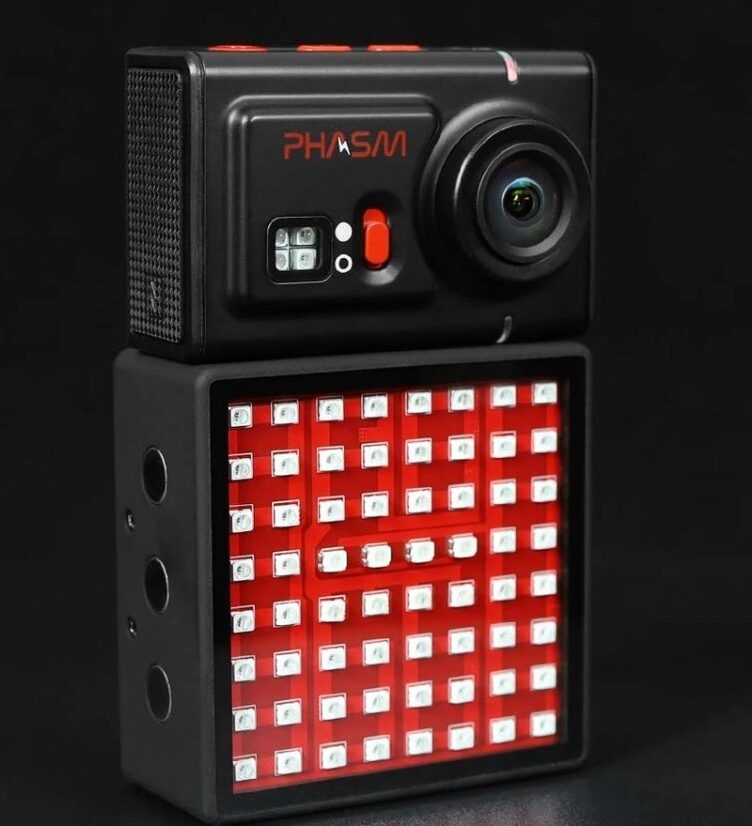
Check Out the Phasm Full Spectrum Video & Night Vision Light Kit Below
What are the Biggest Misconceptions About Aliens and UFOs in 2026?
Misconception 1: “If a case is unresolved, it must be alien”
No. The official record says many unresolved cases simply lack enough data for analysis. Unresolved is a data category, not a proof category.
Misconception 2: “The government is saying nothing”
Also false. The government is saying quite a lot now compared with earlier years. It is publishing reports, declassifying some imagery, building a records collection, and briefing Congress in public and classified settings.
Misconception 3: “Disclosure already proved alien visitation”
That is not what the official public record says. AARO’s latest public reporting and hearing testimony do not support that conclusion.
Expert Insights: What Stands Out Most in 2026?
From a researcher’s standpoint, the biggest story is not one dramatic reveal. It is the slow institutional normalization of the topic.
The government now treats UAP as a mix of aviation safety, intelligence analysis, sensor interpretation, archives policy, and public transparency.
That is a major shift from the old era when the subject was easier to dismiss outright.
Another important signal comes from public opinion. Gallup found in 2021 that four in 10 Americans believed some UFOs were alien spacecraft, up from a third two years earlier.
That does not prove anything about the phenomenon itself, but it shows why the government now faces pressure from both security institutions and the public.
Quote by Rear Admiral Tim Gallaudet (Ret.):“There is a moral imperative to release this information to the public.”
Comparison table: what is public versus what remains restricted
| Category | Public now | Still limited |
|---|---|---|
| Annual statistics | Yes, report totals and trends are public | Some underlying raw datasets are not public |
| Case examples | Some declassified imagery and resolution summaries | Not all footage or sensor metadata is public |
| Historical review | Volume 1 is public | Future volumes and classified source material may remain limited |
| Records process | NARA UAP collection framework is public | Agency review and release timing still varies |
| Congressional oversight | Public hearings and letters exist | Some briefings remain classified |
Supported by official U.S. sources.
Credible Testimonials
John Greenewald Jr., founder of The Black Vault: What stands out most in 2026 is the growing tension between public disclosure and long-running secrecy. As records researcher John Greenewald Jr. put it, “behind the scenes, it was a completely different story.”
Dr. Jon Kosloski, Director of AARO “I appreciate the opportunity to provide a progress update on our office’s efforts to address UAP using a rigorous scientific framework and a data-driven approach. America deserves to know all of the truths about Aliens, UAPs and UFOs.”
Rear Admiral Tim Gallaudet (Ret.) “I have become an advocate for greater transparency from the U.S. government and continue to speak out to validate the credibility of witnesses, UFO and UAP experts and those working behind the scenes making all of this information release a reality.
Practical tips for readers and researchers
- Follow AARO, ODNI, NARA, NASA, and congressional oversight pages before trusting social media summaries.
- Treat the words unresolved, anomalous, and extraterrestrial as very different categories.
- Pay attention to whether a case includes multiple sensors, geolocation, altitude context, weather data, and timing.
- Watch for future additions to the National Archives UAP collection, because that is where slow disclosure may become historically significant.
- Do not confuse political promises with completed declassification. The paper trail matters more than the headline.
House Holds Hearing on UFO Transparency and Whistleblower Protection | Full Video Below
A full congressional hearing focused on UFO and UAP transparency, whistleblower claims and disclosure.
People Also Ask / Google AI Overview Questions and Answers
Is the U.S. government admitting aliens are real in 2026?
No official U.S. public report released through AARO, ODNI, or the National Archives has stated that aliens are confirmed to be visiting Earth. The current official position is narrower: some UAP cases remain unresolved, but AARO says it has found no verifiable evidence of extraterrestrial beings, activity, or technology.
What is AARO disclosing right now?
AARO is disclosing annual case totals, reporting trends, selected imagery, case-resolution reports, hearing materials, and historical review documents. It is also participating in a broader federal records process that supports future public access to UAP-related files.
Why are some UFO files still classified?
According to AARO Director Jon Kosloski, some files remain restricted because they could reveal sensitive sources, methods, collection platforms, or locations, even when the object in the image is not itself extraordinary. That is one of the main reasons full public release can be slow.
How many UAP reports does the government have?
In the 2024 consolidated annual report, AARO said there were 1,652 total reports in its holdings as of October 24, 2024. The office also said it received 757 reports during the covered reporting window discussed in that report.
Are unresolved UAP cases evidence of nonhuman intelligence?
Not by themselves. Officially, unresolved usually means there is not enough quality data to make a confident determination. A lack of resolution is not the same as proof of extraterrestrial or nonhuman technology.
Is Congress still investigating UFOs in 2026?
Yes. The House Oversight task force held a UAP transparency hearing in September 2025, and in April 2026 it said it was continuing its investigation and seeking video files from the Defense Department.
What role does NASA play in UFO research?
NASA’s role is scientific rather than investigative in the intelligence sense. NASA says the UAP issue is a scientific opportunity that requires better data collection, analysis methods, and collaboration across agencies. Its public work focuses on how science can improve future understanding.
Where can the public find official UFO and UAP records?
The best official starting points are AARO’s website, ODNI’s UAP report pages, and the National Archives’ UAP records pages. NARA now maintains pages specifically dedicated to UFO and UAP records in federal holdings.
Check Out Our Top of the Line Night Vision Camcorder Below

Final Thoughts
The hook in this story is still the same one that keeps bringing people back: the government is talking more openly about UFOs than at any time in recent memory, yet the mystery refuses to disappear. In 2026, that tension is the real story.
The U.S. government is disclosing a lot right now. It is disclosing systems, reports, case examples, hearing testimony, records procedures, and some historical findings.
It is also making something else very clear: the public still does not have the full picture. The missing picture may be ordinary classified bureaucracy.
Some of it may be unresolved because the data is weak. Some of it may simply be moving through a slow archival and declassification pipeline.
The surprising revelation is that the modern disclosure story is less about one hidden answer and more about a changing government posture.
The real shift is that UAP are no longer being handled only as fringe folklore.
They are now being processed as intelligence, science, aviation safety, and federal records history all at once. That is a bigger institutional change than many readers realize.
So here is the challenge: stop asking only whether the government has “told us the aliens are here.” Start asking better questions.
What has actually been released? What remains classified, and why? Which cases have good enough data to survive scrutiny?
Which future archive dumps, hearings, and declassifications might finally move this subject from speculation into evidence?
That is where the real disclosure story lives in 2026.
Citations
- U.S. government official sources: ODNI FY2024 UAP report, AARO historical report, AARO hearing statement, NASA UAP page, National Archives UAP records pages.
- Public opinion and current oversight context: Gallup UFO belief polling and House Oversight UAP investigation materials.
About the Author
Kevin Mack is a paranormal research writer, UFO and supernatural content creator, and the founder of Paraghosts.com. He writes in-depth articles on ghosts, hauntings, aliens, and unexplained phenomena with a focus on clear research, real-world investigation topics, and reader-friendly paranormal education.
Disclaimer
This article is for informational and entertainment purposes only. It explores aliens, UFOs, UAP reports, government disclosures, and related theories using publicly available sources, commentary, and research. The content does not claim to prove extraterrestrial life or secret government activity beyond what is officially documented. Readers should use critical thinking, review original sources, and understand that some topics discussed involve ongoing investigations, speculation, and unresolved questions.
Sources and References
- Office of the Director of National Intelligence (ODNI) – 2024 Consolidated Annual Report on Unidentified Anomalous Phenomena
Best primary source for official U.S. government reporting, case totals, and current public disclosure language. - All-domain Anomaly Resolution Office (AARO) – AARO Official Website
Best source for official Pentagon UAP updates, released imagery, case pages, and hearing materials. - NASA Science – UAP: Unidentified Anomalous Phenomena
Strong science-based reference for explaining how NASA frames UAP research and the data-quality problem. - National Archives – Records Related to UFOs and UAPs
Good source for the federal records side of disclosure and public access to archived UAP materials. - Gallup – Do Americans Believe in UFOs?
Useful for citing public opinion data and showing how mainstream interest in UFOs has grown.
Related Articles
- UAP vs UFO: Key Differences and Why the Terminology Matters
https://www.paraghosts.com/uap-vs-ufo-key-differences/
Best fit for the section explaining why the government now uses the term UAP instead of UFO. - Roswell UFO Incident: What Really Happened in 1947 Declassified?
https://www.paraghosts.com/roswell-ufo-incident-1947-declassified/
Best fit for the historical context section or anywhere you mention legacy government secrecy and famous UFO cases.